
How an Emotional Wellbeing Coach Helps Parents Model Healthy Emotional Habits

Parents shape their children’s emotional world long before they ever explain what an emotion is. Kids learn how to handle stress, disappointment, joy, and conflict by watching the adults around them do it first. This is where an emotional wellbeing coach becomes invaluable not just for the parent’s own growth, but as a quiet, powerful influence on the next generation. When a parent works on their emotional health, they’re not just improving their own life. They’re teaching, by example, what it looks like to feel deeply and still function well. This article looks at how coaching supports parents in building those habits, and why the ripple effects touch far more than emotional wellbeing alone reaching into physical wellbeing, mental wellbeing, and even nutritional wellbeing at home. Why Emotional Modeling Matters More Than Advice Children rarely learn emotional regulation from being told to “calm down.” They learn it from watching a parent pause before reacting, name what they’re feeling, or apologize after losing their temper. This is called emotional modeling, and it’s one of the most consistent findings in developmental psychology: kids absorb behavior far more than they absorb instruction. An emotional wellbeing coach works with parents to become more aware of their own patterns the moments where stress spills into snapping, or where anxiety gets swallowed instead of named. The goal isn’t perfection. It’s building enough self-awareness that a parent can respond instead of react, even on hard days. Did You Know? Research on emotional contagion shows that children as young as infants can pick up on a caregiver’s stress through tone of voice and body language alone, well before they understand any words being spoken. What an Emotional Wellbeing Coach Actually Does Coaching in this space isn’t therapy, and it isn’t generic parenting advice. It sits somewhere in between practical, forward-focused, and built around the parent’s specific home life. A typical coaching relationship might include: Pro Tip: One simple habit coaches often introduce is the “naming pause” saying out loud, “I’m feeling frustrated right now, I need a second,” in front of the child. It does two things at once: it regulates the parent and it gives the child language for their own future feelings. The Connection Between Emotional Wellbeing and Physical Wellbeing Emotional health and physical wellbeing are not separate tracks they’re deeply intertwined, and this is often one of the first things a coach helps parents see clearly. Chronic stress keeps the body in a heightened state, affecting sleep quality, energy levels, and even immune function. A parent running on unmanaged stress is often also running on poor sleep and low physical reserves, which makes emotional regulation even harder a cycle that feeds itself. Coaches frequently work physical wellbeing into the plan alongside emotional strategies: encouraging regular movement, protecting sleep windows, and helping parents notice how their body feels before an emotional reaction hits. A tight chest, a clenched jaw, shallow breathing — these are often the first signals of an emotional spike, and physical awareness becomes an early warning system. When parents learn to recognize the body’s signals, they get a window to intervene before frustration turns into a blow-up. Mental Wellbeing: The Foundation Underneath It All Mental wellbeing is the broader container that emotional regulation lives inside. It includes how a parent thinks about themselves, how they handle uncertainty, and how resilient they are when life doesn’t go as planned. An emotional wellbeing coach often spends significant time here, because emotional habits rarely change in isolation from mental patterns. For example, a parent who carries a belief that “good parents never lose their temper” will feel intense shame after a hard moment, which often leads to either overcorrecting with excessive apologies or shutting down emotionally. Coaches help parents build a more realistic, self-compassionate mental framework one where mistakes are expected and repair matters more than perfection. Expert Insight: In coaching work with parents, one pattern shows up again and again: the parents who struggle most with emotional regulation aren’t the ones who feel the most, but the ones who were taught early on that certain feelings weren’t allowed. Rebuilding a healthier relationship with the full range of emotion including anger, sadness, and fear is often the real turning point, not just symptom management. Mental wellbeing work also includes: Nutritional Wellbeing’s Quiet Role in Emotional Regulation It’s easy to overlook, but nutritional wellbeing plays a real role in a parent’s capacity to stay emotionally regulated. Blood sugar crashes, dehydration, and skipped meals don’t just affect physical energy they directly affect mood stability and patience. A parent running on coffee and skipped lunches is neurologically primed for shorter fuses and quicker emotional reactivity. Coaches often help parents build small, sustainable nutritional habits that support steadier moods throughout the day: regular meals instead of skipped ones, balanced blood sugar, and enough hydration to avoid the irritability that comes with dehydration. This isn’t about strict diets or food rules. It’s about recognizing that a parent’s body needs consistent fuel to have the emotional bandwidth parenting requires. Common Mistake: Many parents treat their own meals as optional, especially during busy stretches, while making sure their children eat regularly. Coaches often flag this pattern early, since it quietly undermines the very emotional stability the parent is trying to build. Bringing It All Together: A Whole-Person Approach What makes coaching effective isn’t a single technique it’s the integration of physical, mental, nutritional, and emotional wellbeing into one coherent picture. A parent who sleeps poorly, skips meals, and carries unexamined beliefs about their own worth as a parent will struggle to model calm, even with the best intentions. An emotional wellbeing coach helps parents see these connections and build small, realistic habits across all four areas not by overhauling everything at once, but by identifying the one or two shifts that will have the most impact on a given family’s daily life. Over time, children raised by parents doing this work don’t necessarily grow up with parents who never lose their temper.
Setting Realistic Weight Loss Goals with a Personal Health and Wellness Coach
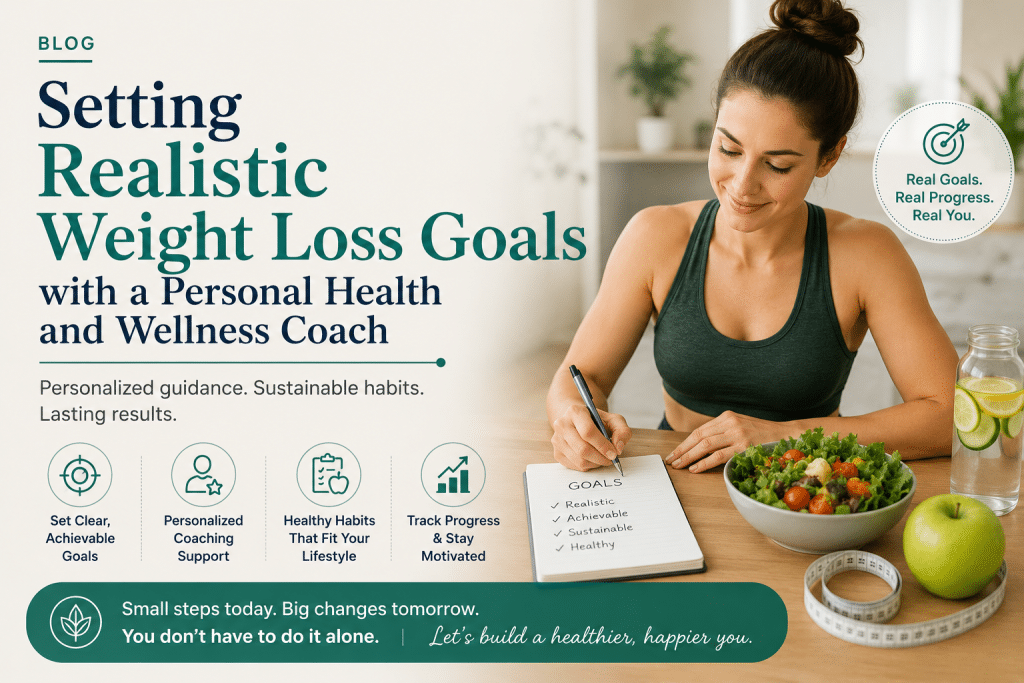
Most weight loss goals are broken before they even begin. Someone decides to lose 20 pounds in a month, cuts every carbohydrate from their diet, and commits to daily two-hour workouts they’ve never done before. Three weeks later, they’re exhausted, discouraged, and back where they started sometimes further behind. This isn’t a willpower problem. It’s a goal-setting problem. Did You Know? Research on behavior change consistently shows that goals framed around extreme, short-term outcomes have significantly higher dropout rates than goals built around sustainable, incremental habits. The number on the scale isn’t the issue the structure behind it is. A personal health and wellness coach exists precisely to fix this. Rather than handing you a generic meal plan and a workout calendar, a coach helps you build goals that account for your actual life: your schedule, your stress levels, your relationship with food, and your physical starting point. What “Realistic” Actually Means “Realistic” doesn’t mean small or unambitious. It means a goal that’s grounded in your current circumstances and adjusts as those circumstances change. A realistic weight loss goal typically has three characteristics: That third point is where most people go wrong. They treat weight loss as purely a math problem calories in, calories out and ignore the two forces that actually determine whether the math holds up over time: how their mind handles the process, and how their relationship with food evolves. Physical Wellbeing: Setting Goals Your Body Can Sustain Physical goals are usually where people start, and for good reason they’re visible and easy to track. But “realistic” physical goals look different than most people expect. Pro Tip: Instead of setting a goal around a number on the scale, set goals around behaviors you can control every day workout consistency, step count, sleep hours, hydration. The scale follows the behavior; it rarely moves the other way around. A personal health and wellness coach typically structures physical goals in layers: This layered approach matters because bodies adapt at different speeds. Someone returning to exercise after years of inactivity needs a completely different physical goal structure than someone who trains regularly but has hit a plateau. A coach calibrates the goal to the person, not the other way around. Mental Wellbeing: The Goal-Setting Piece Most People Skip This is the part of weight loss goal-setting that gets the least attention and causes the most damage when ignored. Weight loss goals that don’t account for mental wellbeing tend to follow a predictable pattern: early motivation, a minor setback, harsh self-criticism, and eventually complete disengagement. The goal itself often wasn’t unrealistic the emotional framework around it was. Expert Insight: Based on patterns seen across long-term coaching relationships, clients who build in mental wellbeing checkpoints not just physical ones are far more likely to stay consistent through plateaus, travel, illness, and other disruptions than those who only track physical metrics. The goal survives because the person’s relationship with the goal is more resilient. A personal health and wellness coach incorporates mental wellbeing into goal-setting by: This matters because weight loss is rarely linear. Stress, hormonal cycles, travel, illness, and life events all affect the number on the scale independent of effort. Goals that don’t account for this mental layer tend to collapse the first time reality doesn’t match the plan. Nutritional Wellbeing: Building Goals Around Food, Not Against It Nutrition goals are often where the most damage happens, because they’re the easiest to make extreme. Cutting entire food groups, adopting rigid meal plans copied from someone else’s routine, or setting calorie targets far below what’s sustainable all of these produce short-term results and long-term rebound. A realistic nutritional goal, shaped with a personal health and wellness coach, usually starts from a different question: not “what can I eliminate?” but “what can I sustain?” This typically includes: Common Mistake: Setting a nutrition goal based on the most restrictive plan available, assuming stricter automatically means faster or better results. In practice, plans that are too restrictive to maintain almost always underperform moderate, sustainable ones over a 6–12 month period. How a Personal Health and Wellness Coach Brings It Together {#how-a-coach-brings-it-together} The real value of working with a personal health and wellness coach isn’t any single piece of advice it’s the integration of all three areas into one coherent plan. “Based on working with clients across very different starting points, I’ve consistently seen that the ones who succeed long-term aren’t the ones with the most aggressive plans they’re the ones whose physical, mental, and nutritional goals were built to support each other instead of competing for the same limited willpower.” A coach typically works through this integration in stages: This is the structural difference between a goal that survives six months and one that quietly disappears by week three. Common Mistakes When Setting Weight Loss Goals A Simple Framework to Set Your Own Realistic Goals If you’re not ready to work with a personal health and wellness coach yet, this framework can help you start: Area Ask Yourself Example Goal Physical What can I consistently do 3x/week? Walk 30 minutes, 3x weekly Mental How will I respond to a setback? Write down one lesson instead of skipping the next day Nutritional What’s one sustainable food change? Add a protein source to breakfast daily Start with one goal per category. Add complexity only once the current goals feel automatic usually 4–6 weeks in.